JeepParts
My Garage
My Account
Cart
OEM Chrysler Crossfire Crankshaft Position Sensor
Engine Crankshaft Position Sensor- Select Vehicle by Model
- Select Vehicle by VIN
Select Vehicle by Model
orMake
Model
Year
Select Vehicle by VIN
For the most accurate results, select vehicle by your VIN (Vehicle Identification Number).
1 Crankshaft Position Sensor found
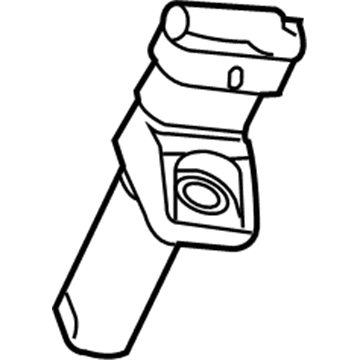
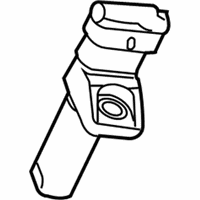
Chrysler Crossfire Crankshaft Position Sensor Part Number: 5080352AA
Chrysler Crossfire Crankshaft Position Sensor
Choose OEM Crankshaft Position Sensor that meet Chrysler factory standards. Chrysler designs and tests every component for precision and durability. Each Crankshaft Position Sensor follows strict manufacturing steps to lock in quality and fit. If your Chrysler Crossfire matters to you, OEM parts make the smart choice. You'll get the exact look, feel, and performance you expect. Shop genuine Crossfire parts at the highly competitive prices online. Enjoy a manufacturer's warranty, a hassle-free return policy, and rapid delivery. No more guesswork with off brands. Get genuine parts with exact fit and true factory performance. Shop with confidence today at JeepPartsDeal.com.
Chrysler Crossfire Crankshaft Position Sensor tells the Chrysler powertrain control module the exact position and the exact rotational speed of the crankshaft. By means of continuous impulses, the Crankshaft Position Sensor makes the fuel injection and ignition timing of the Crossfire engine precise, allowing it to start easily and run properly. When a Crankshaft Position Sensor fails, this communication is compromised. The Chrysler unit, positioned near the main crank pulley, flywheel, camshaft or on the crankshaft itself, detects changes in tooth edges or magnetic fields caused by rotary crank motion and converts them into electrical signals. If the Crankshaft Position Sensor (CKP) fails, you may not be able to start your vehicle at all, or the engine can cut out while driving. It generally causes poor idling and misfires, plus the engine can hesitate when you accelerate, particularly when the engine is hot. Inductive, Hall-effect, magnetoresistive and optical designs all represent common sensor types. Inductive versions make their own voltage, Hall-effect and magnetoresistive sensor styles sense static magnetic fields, while optical sensors provide very accurate edge detection but are susceptible to fouling. Every Chrysler Crossfire application, no matter the type, relies on a properly sealed Crankshaft Position Sensor to resist heat, vibration, and corrosion, so the ignition and fuel delivery settings remain synchronized with the crankshaft's movement in the Crossfire powertrain.
Chrysler Crossfire Crankshaft Position Sensor Parts and Q&A
- Q:How should the Crankshaft Position Sensor be serviced on Chrysler Crossfire?A:In order to service the crankshaft position sensor, disconnect the negative battery cable and remove the air cleaner housing. Unplug the crankshaft position sensor harness connector. Remove the retaining bolt and crankshaft position sensor. To install, the crankshaft position sensor is positioned on the engine and tightened to 8 Nm (71 in. lbs.). Reconnect the crankshaft position sensor harness connector. Put the air cleaner housing back on and reconnect the negative battery cable.
Related Chrysler Crossfire Parts
 Chrysler Crossfire Air Filter
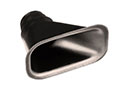 Chrysler Crossfire Air Duct
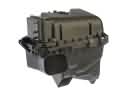 Chrysler Crossfire Air Filter Box
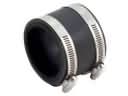 Chrysler Crossfire Air Intake Coupling
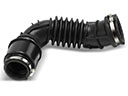 Chrysler Crossfire Air Intake Hose
 Chrysler Crossfire Air Temperature Sensor
 Chrysler Crossfire Fuel Level Sensor
 Chrysler Crossfire Fuel Rail
 Chrysler Crossfire Fuel Tank
 Chrysler Crossfire Gas Cap
 Chrysler Crossfire Intake Manifold Gasket
 Chrysler Crossfire Temperature Sender