JeepParts
My Garage
My Account
Cart
OEM Jeep Gladiator Brake Pads
Disc Brake Pad Set- Select Vehicle by Model
- Select Vehicle by VIN
Select Vehicle by Model
orMake
Model
Year
Select Vehicle by VIN
For the most accurate results, select vehicle by your VIN (Vehicle Identification Number).
2 Brake Pads found
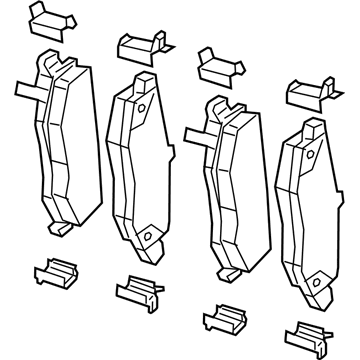
Jeep Gladiator Pad Kit - Rear Disc Brake Part Number: 68376749AF
$66.06 MSRP: $98.75You Save: $32.69 (34%)Ships in 1-2 Business Days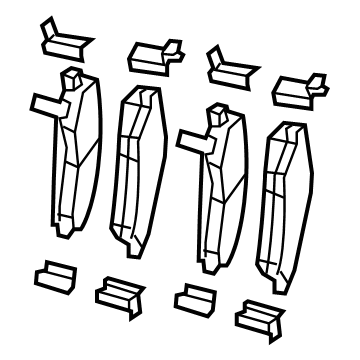
Jeep Gladiator Brake Pads, Front Part Number: 68635837AA
$119.77 MSRP: $184.00You Save: $64.23 (35%)Ships in 1-2 Business Days
Jeep Gladiator Brake Pads
Choose OEM Brake Pads that meet Jeep factory standards. Jeep designs and tests every component for precision and durability. Each Brake Pads follows strict manufacturing steps to lock in quality and fit. If your Jeep Gladiator matters to you, OEM parts make the smart choice. You'll get the exact look, feel, and performance you expect. Shop genuine Gladiator parts at the highly competitive prices online. Enjoy a manufacturer's warranty, a hassle-free return policy, and rapid delivery. No more guesswork with off brands. Get genuine parts with exact fit and true factory performance. Shop with confidence today at JeepPartsDeal.com.
Jeep Gladiator Brake Pads utilize controlled friction to convert wheel motion into heat, providing reliable stopping power. The Brake Pads comprise a sturdy steel backing plate that is bonded to a high-friction compound that does not fade. All the while, the wear indicator will chirp when it is time for service, helping the Jeep Gladiator driver avoid damage to the rotor and long stopping distances. New Brake Pads' complete pad thickness restoration brings the car back to life, ensuring smooth pedal response, with confident halts in traffic, and durability in daily drives or weekend trails. The Jeep Gladiator is more than just its brakes. It has a robust body-on-frame design, standard four-wheel drive, and lively engine options, a Pentastar V6 with 285 horsepower and a unique EcoDiesel V6, both offered with a choice of six-speed manual or eight-speed automatic. The available front-facing trail camera, Off-Road Pages showing pitch, roll and diff status, plus available adaptive cruise control and automatic emergency braking make the Gladiator equally as adventurous as it is civilized; removable doors and fold-down windshield give you an open-air freedom no pickup truck can match. Those who own one of these vehicles appreciate the abundant cargo bed which hauls bikes, boards, and camping gear. To install new Jeep Gladiator Brake Pads, first get the vehicle securely positioned, and then remove the wheel. Next, unbolt the caliper, swap pads, compress the piston, and refit the hardware. Then, torque the bolts and reinstall the wheel. Finally, pump the pedal before driving.
Related Jeep Gladiator Parts
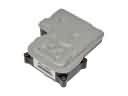 Jeep Gladiator ABS Control Module
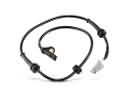 Jeep Gladiator ABS Sensor
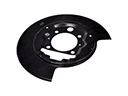 Jeep Gladiator Backing Plate
 Jeep Gladiator Brake Caliper
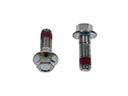 Jeep Gladiator Brake Caliper Bolt
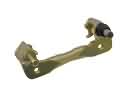 Jeep Gladiator Brake Caliper Bracket
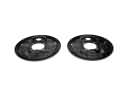 Jeep Gladiator Brake Dust Shields
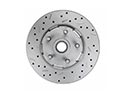 Jeep Gladiator Brake Rotor
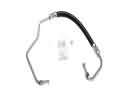 Jeep Gladiator Hydraulic Hose
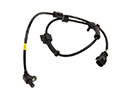 Jeep Gladiator Speed Sensor
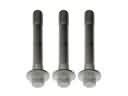 Jeep Gladiator Wheel Hub Bolt
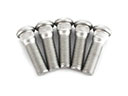 Jeep Gladiator Wheel Stud