JeepParts
My Garage
My Account
Cart
OEM 2002 Jeep Wrangler Intake Manifold
Engine Intake Manifold- Select Vehicle by Model
- Select Vehicle by VIN
Select Vehicle by Model
orMake
Model
Year
Select Vehicle by VIN
For the most accurate results, select vehicle by your VIN (Vehicle Identification Number).
2 Intake Manifolds found
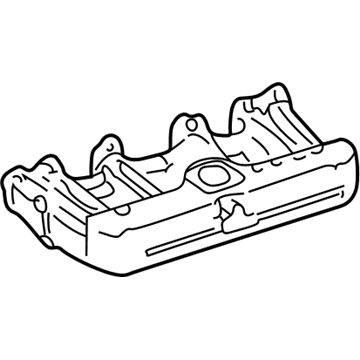
2002 Jeep Wrangler Intake Manifold Part Number: 4854197AB
Product Specifications- Other Name: Manifold - Intake; Engine Intake Manifold; Manifold Intake
- Item Weight: 13.50 Pounds
- Item Dimensions: 25.8 x 13.8 x 8.5 inches
- Condition: New
- Fitment Type: Direct Replacement
- SKU: 4854197AB
- Warranty: This genuine part is guaranteed by Mopar's factory warranty.
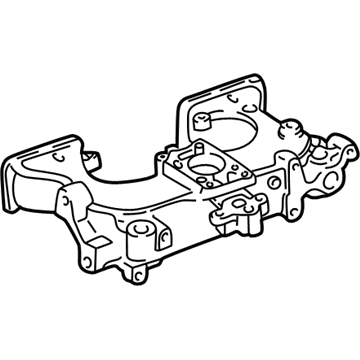

2002 Jeep Wrangler Intake Manifold Part Number: 53010245
Product Specifications- Other Name: Manifold - Intake; Engine Intake Manifold; Manifold, Intake; Manifold Intake
- Item Weight: 7.50 Pounds
- Item Dimensions: 14.2 x 11.1 x 7.5 inches
- Condition: New
- Fitment Type: Direct Replacement
- SKU: 53010245
- Warranty: This genuine part is guaranteed by Mopar's factory warranty.
2002 Jeep Wrangler Intake Manifold Parts and Q&A
- Q: How to Remove and Install an Intake Manifold on 2002 Jeep Wrangler?A: The first step to replacing the intake manifold is to disconnect the negative cable from the battery and drain the cooling system. Next, take out the air inlet hose and resonator from the throttle body and air cleaner housing and later on, remove the accessory drive belt. Loosen the power steering pump and the brackets from the water pump and intake manifold and hold the assembly with mechanics wire to the radiator upper crossmember. Open the fuel pressure and take out the fuel supply hose from the fuel rail. Take off the accelerator cable and, if the car has one, the speed control and transmission line pressure cable from the throttle body and cable bracket, always using light pressure on the finger to remove the speed control connector. Cut off the power from every connector, then take all the harnesses away from the manifold; this includes wires to the throttle position sensor, idle air control motor, coolant temperature sensor, manifold air temperature sensor, fuel injectors and oxygen sensor. Remove the vacuum hose from the CCV and MAP sensor connectors at the intake manifold and the hoses from the HVAC supply and CCV at the cover of the cylinder head. Expel the molded vacuum harness and cut the vacuum brake booster hose at the intake manifold. First, remove bolts 2 through 5 from the intake manifold bracket and leave bolt No. 1 and nuts 6 and 7 until later. Then, remove the manifold and gaskets, emptying the coolant from the manifold. Try to remove dirt from the intake manifold to the head of the cylinders and watch for any cracks, pitting, warping or twisting. Before installing, clean the pieces where they make contact, put a new gasket in place over the locating dowels, align the manifold and only finger tighten the bolts. Adjust each fastener as follows: Fastener No. 1 requires 41 Nm (30 ft. lbs.), Nos. 2 through 5 require 31 Nm (23 ft. lbs.) and Nos. 6 and 7 require 23 Nm (17 ft. lbs.). First, review the O-rings on the fuel line and if any are bad, swap them out; then connect the fuel supply tube to the fuel rail's inlet afterward. Run the vacuum lines into the intake manifold and cylinder head cover and then secure each electrical connector for the throttle position sensor, idle air control motor, coolant temperature sensor, manifold air temperature sensor, fuel injectors and oxygen sensor. Run the brake booster supply hose and the CCV and MAP sensor hoses to their spots at the throttle body. Set up the power steering pump and the bracket on the water pump and intake manifold, using an appropriate torque of 28 Nm (21 ft. lbs.) for the pump and 47 Nm (35 ft. lbs.) for the bracket. Align the accessory drive belt properly and avoid engine overheating and then connect the belt. Join the accelerator cable to the throttle lever and mount the bracket and, if provided, connect the speed control and transmission pressure cable after that. Replace the coolant, join the air inlet hose and resonator to the throttle body and air cleaner, link the negative battery cable and test the vehicle for any leaks.
Related 2002 Jeep Wrangler Parts
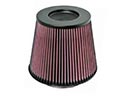 2002 Jeep Wrangler Air Filter
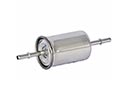 2002 Jeep Wrangler Fuel Filter
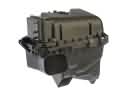 2002 Jeep Wrangler Air Filter Box
 2002 Jeep Wrangler Fuel Filler Neck
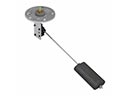 2002 Jeep Wrangler Fuel Sending Unit
 2002 Jeep Wrangler Fuel Tank Skid Plate
 2002 Jeep Wrangler Intake Manifold Gasket
 2002 Jeep Wrangler Air Intake Coupling
 2002 Jeep Wrangler Fuel Level Sensor
 2002 Jeep Wrangler Fuel Pump Seal
 2002 Jeep Wrangler Fuel Tank Lock Ring
 2002 Jeep Wrangler Fuel Tank Strap