JeepParts
My Garage
My Account
Cart
OEM 2003 Jeep Grand Cherokee Fuel Rail
Engine Fuel Rail- Select Vehicle by Model
- Select Vehicle by VIN
Select Vehicle by Model
orMake
Model
Year
Select Vehicle by VIN
For the most accurate results, select vehicle by your VIN (Vehicle Identification Number).
2 Fuel Rails found
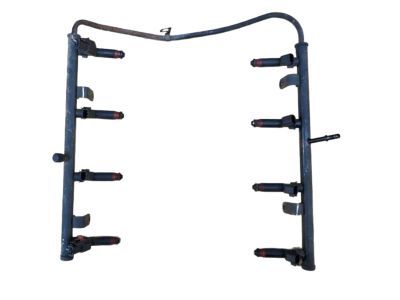
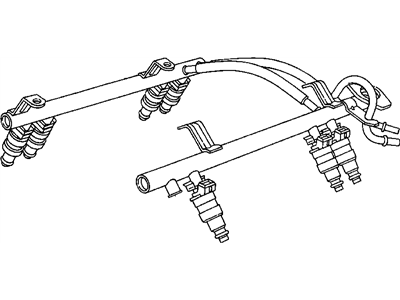
2003 Jeep Grand Cherokee Fuel Rail Part Number: 53030848AC
Product Specifications- Other Name: Rail - Fuel; Rail Fuel
- Replaces: 53030848AB
- Item Weight: 5.60 Pounds
- Item Dimensions: 21.7 x 21.1 x 8.6 inches
- Condition: New
- Fitment Type: Direct Replacement
- SKU: 53030848AC
- Warranty: This genuine part is guaranteed by Mopar's factory warranty.
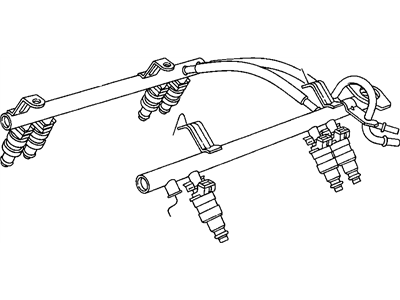
2003 Jeep Grand Cherokee Fuel Rail Part Number: 5014496AE
Product Specifications- Other Name: Rail - Fuel
- Replaces: 5014496AC, 5014496AB
- Item Weight: 1.20 Pounds
- Item Dimensions: 22.6 x 4.5 x 2.0 inches
- Condition: New
- Fitment Type: Direct Replacement
- SKU: 5014496AE
- Warranty: This genuine part is guaranteed by Mopar's factory warranty.
2003 Jeep Grand Cherokee Fuel Rail Parts and Q&A
- Q: How to Service a Fuel Rail and Injectors on 2003 Jeep Grand Cherokee?A: Because the fuel damper is not usually serviced on its own, the fuel rail must be carefully dealt with, as the fuel system is continually pressurized, even without the engine running. Open the fuel tank filler tube cap and run the Fuel System Pressure Release Procedure. Separate the negative battery cable from the battery, unscrew the air tube at the top of the throttle body and if your engine needs it, take out the air cleaner ducts too. To disconnect at each fuel injector, push the red button away from the injector, press the tab and remove the connector. Factory fuel injection wiring harnesses are labeled to let you identify where the injectors are. If necessary, unlock the clip nuts holding the oxygen sensor wiring to the fuel rail studs and then release the fuel line clip and the line itself from the rail, as well. When the vehicle is so equipped, unhook the throttle, speed control and automatic transmission cables from the throttle body and take out the cable routing bracket at the intake manifold. Clean all the dirt and debris on each fuel injector at the intake manifold and afterwards remove all the fuel rail mounting bolts and nuts. Rock the fuel rail back and forth to free it, keeping in mind that all fuel injectors come out of their proper holes in the intake manifold. During installation, it's best to clean the injector bores of the intake manifold, then place a light coating of clean engine oil onto the injector O-rings to help them go in properly. Align the tips of each injector with its own bore in the intake manifold's casting and set them in place. Secure the fuel rail mounts to the engine with rotational force of 11 ±3 Nm (100 ±25 in. lbs.). Connect the fuel injectors to each other, making sure the connections are locked. Connect the fuel line to the fuel rail, latch the fuel filler tube, install a protective cap to the test port if that's included and attach the bracket for the cable around the manifold again. Connect the throttle cable, speed control cable and automatic transmission cable to the throttle body if your engine has one and clip the oxygen sensor wiring nuts to the studs on the fuel rail mount. Next, fit the end of the air tube into the top of the throttle body, insert the fuel tank cap, reattach the negative battery terminal and turn the engine on to search for any leaks.
Related 2003 Jeep Grand Cherokee Parts
 2003 Jeep Grand Cherokee Fuel Pump
 2003 Jeep Grand Cherokee Gas Cap
 2003 Jeep Grand Cherokee Fuel Filter
 2003 Jeep Grand Cherokee Fuel Tank
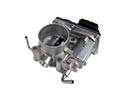 2003 Jeep Grand Cherokee Throttle Body
 2003 Jeep Grand Cherokee Fuel Injector
 2003 Jeep Grand Cherokee Fuel Filler Neck
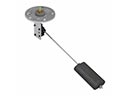 2003 Jeep Grand Cherokee Fuel Sending Unit
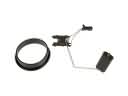 2003 Jeep Grand Cherokee Fuel Level Sensor
 2003 Jeep Grand Cherokee Fuel Pump Gasket
 2003 Jeep Grand Cherokee Fuel Tank Strap
 2003 Jeep Grand Cherokee Idle Control Valve