JeepParts
My Garage
My Account
Cart
OEM 2005 Dodge Ram 3500 Catalytic Converter
Cat. Converter- Select Vehicle by Model
- Select Vehicle by VIN
Select Vehicle by Model
orMake
Model
Year
Select Vehicle by VIN
For the most accurate results, select vehicle by your VIN (Vehicle Identification Number).
2 Catalytic Converters found
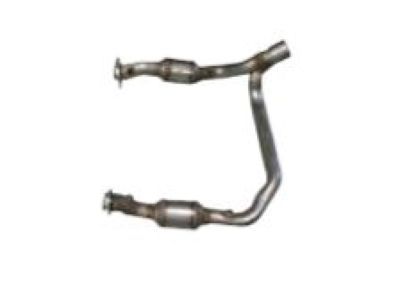
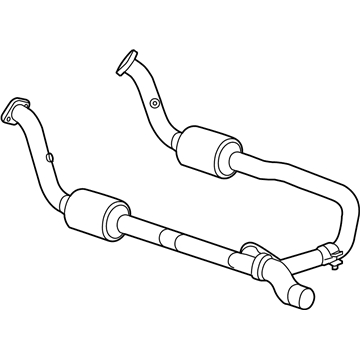
2005 Dodge Ram 3500 Catalytic Converter Part Number: 52121210AB
Product Specifications- Other Name: Converter - Catalytic; Exhaust Pipe; Converter & Pipe; Converter Catalytic
- Replaces: 52121210AA
- Item Weight: 52.00 Pounds
- Item Dimensions: 43.9 x 12.5 x 8.4 inches
- Condition: New
- Fitment Type: Direct Replacement
- SKU: 52121210AB
- Warranty: This genuine part is guaranteed by Mopar's factory warranty.
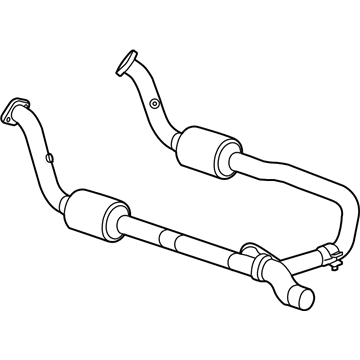
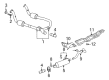
2005 Dodge Ram 3500 Catalytic Converter Part Number: 52121291AA
Product Specifications- Other Name: Converter - Exhaust; Exhaust Pipe; Converter & Pipe; Pipe And Converter Exhaust
- Item Weight: 38.70 Pounds
- Item Dimensions: 60.1 x 31.4 x 20.4 inches
- Condition: New
- Fitment Type: Direct Replacement
- SKU: 52121291AA
- Warranty: This genuine part is guaranteed by Mopar's factory warranty.
2005 Dodge Ram 3500 Catalytic Converter Parts and Q&A
- Q: How to Service and Repair a Catalytic Converter on a 5.9L Diesel Engine on 2005 Dodge Ram 3500?A: Before servicing or repairing the catalytic converter on a 5.9L diesel, elevate and support the vehicle. Add heat valve lubricant to all screws and nuts, then let it sit for around 5 minutes. With the exhaust not attached to the car, take out the plastic clamp bolts (5) attaching the exhaust to the catalytic converter clamp, but not the nut from the T-Bolt. Always install a new clamp where the catalytic converter meets the exhaust manifold, since the original one isn't reusable. Remove the nut near the turbocharger, then take off the T bolt end of the fastener as well. Open the clamp fully and remove the catalytic converter and front exhaust pipe from the car, putting the clamp away. Then, unclamp the front exhaust pipe to catalytic converter and detach the front exhaust from the catalytic converter afterward. Installing the catalytic converter (4) means placing it on the front exhaust pipe (2), so the alignment tab (5) fits into the corresponding slot (6) on the catalytic converter. Slide the catalytic converter (4) into exhaust pipe (6) until its tab is in position with the slot in the exhaust pipe (6). Attach the front exhaust pipe to the turbocharger, add a new clamp and secure all nuts to a torque value of 11 Nm (100 inch lbs.). Lay the exhaust clamp (5) over the join between the exhaust pipe (6) and catalytic converter (5) and tighten the clamp nuts to 54.2 Nm (40 ft. lbs.) of torque. Check that there is at least 25.4 mm (1.0 inch) space between the exhaust system and all body and frame sections and change anything that is too close. Now, drop the vehicle, run the engine and look for exhaust leaks, making repairs where necessary.
Related 2005 Dodge Ram 3500 Parts
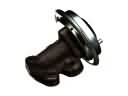 2005 Dodge Ram 3500 EGR Valve
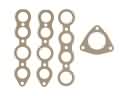 2005 Dodge Ram 3500 Exhaust Manifold
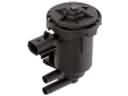 2005 Dodge Ram 3500 Canister Purge Valve
 2005 Dodge Ram 3500 Crankcase Breather Hose
 2005 Dodge Ram 3500 Exhaust Clamp
 2005 Dodge Ram 3500 Exhaust Hanger
 2005 Dodge Ram 3500 Exhaust Heat Shield
 2005 Dodge Ram 3500 Exhaust Manifold Gasket
 2005 Dodge Ram 3500 Exhaust Pipe
 2005 Dodge Ram 3500 Muffler
 2005 Dodge Ram 3500 Tail Pipe
 2005 Dodge Ram 3500 Vapor Canister