JeepParts
My Garage
My Account
Cart
OEM Dodge Grand Caravan Parking Brake Shoe
Emergency Parking Brake Shoe- Select Vehicle by Model
- Select Vehicle by VIN
Select Vehicle by Model
orMake
Model
Year
Select Vehicle by VIN
For the most accurate results, select vehicle by your VIN (Vehicle Identification Number).
2 Parking Brake Shoes found
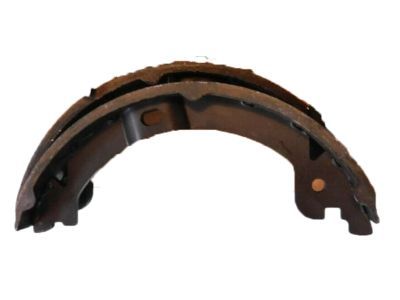
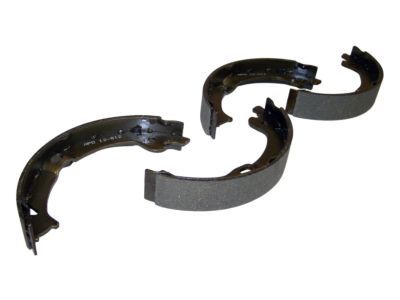
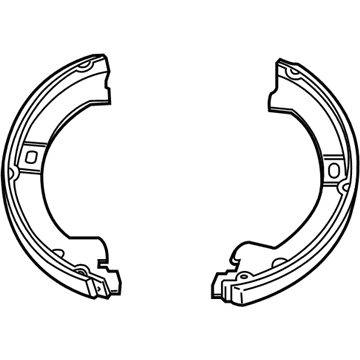
Dodge Grand Caravan Parking Brake Shoes, Rear Part Number: 5019802AA
$181.52 MSRP: $206.00You Save: $24.48 (12%)Ships in 1-2 Business Days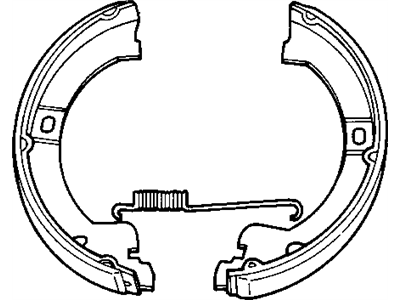

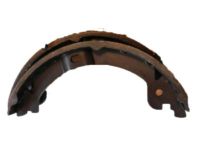
Dodge Grand Caravan Shoes Part Number: 4882576
Dodge Grand Caravan Parking Brake Shoe
Choose OEM Parking Brake Shoe that meet Dodge factory standards. Dodge designs and tests every component for precision and durability. Each Parking Brake Shoe follows strict manufacturing steps to lock in quality and fit. If your Dodge Grand Caravan matters to you, OEM parts make the smart choice. You'll get the exact look, feel, and performance you expect. Shop genuine Grand Caravan parts at the highly competitive prices online. Enjoy a manufacturer's warranty, a hassle-free return policy, and rapid delivery. No more guesswork with off brands. Get genuine parts with exact fit and true factory performance. Shop with confidence today at JeepPartsDeal.com.
The Parking Brake Shoe used on Dodge Grand Caravan automobiles play a very important role in holding the wheels with an aim of preventing them from moving as the car is parked. Its main purpose is to jam the brake lining against the drum wall to fixed the wheels when the parking brake is applied. In Dodge Grand Caravan models Different style of Parking Brake Shoe have been used in the past few years to improve the performance and durability of the product. The basics of the system are that it needs friction to lock the wheels from moving once again, although significant differences may lie in what he materials made or the specific design to accommodate for modern technology in vehicles. In general, the Parking Brake Shoe plays a crucial role of keeping the Dodge Grand Caravan safe and in position especially when it is stationary.
Dodge Grand Caravan Parking Brake Shoe Parts and Q&A
- Q: How to Service and Repair a Parking Brake Shoe on Dodge Grand Caravan?A:Before replacing the parking brake shoe, complete two steps. Set the parking brake to avoid axle and hub motion and undo the bolt that holds the drum. Remove the vehicle from the ground and lift the wheel and tire assembly off the axle. After that, take out the cotter pin and nut retainer from the end of the outer C/V joint, along with the spring washer, hub nut and washer. After releasing the parking brake, lock the automatic adjuster to loosen the rear park brake cables. Then, pull downward on the cable of the front park brake by hand until it can be secured with locking pliers. Remove brake adapter guide pin bolts holding the caliper, tilt the back lever in the direction of removal and gently pull out the front part of the caliper from under the adapter. Grab the caliper carefully to stop the flexible brake hose from being damaged and then remove the rotor from the hub/bearing. With a 1/2 wrench, compress the locking tabs on the actuator lever and adapter, remove the cable from them and detach the horseshoe clip from the park brake cable retainer. Separate the hub/bearing from the shaft by pulling it out, then using a wrench, take the wheel speed sensor off the axle and stub shaft. With the adapter off the axle and lying in a vise, take out the lower return spring, hold down spring, pin from the leading park brake shoe, adjuster and finally the leading shoe. Check the rear park brake shoe in the same way and then look at the park brake shoe actuator for wear and binding signs. The initial setup for installation is guided by the trailing brake shoe, where you put the hold down pin upright, then add the springs before closing the brake assembly. Fit the first park brake shoe into the top anchor point and spin the other shoe outward toward the shoes' circumference. After that, insert the adjustment piece between those two shoes. Place the hold down spring and pin into the leading shoe and insert the lower return spring behind both shoes. Slide the adapter and hub/bearing onto the axle and fix them with the four bolts, tightening each one in a crisscross pattern to 129 Nm (95 ft. lb.) of torque. After reinstalling the wheel speed sensor with bolt to a torque of 12 Nm (105 inch lbs.), attach the park brake cable to the adapter so the locking tabs are expanded. Plug the cable into the actuator lever, fit a horseshoe clip with the curved end aiming up and remove the locking pliers from the front brake cable. Slide the drum-in-hat brake shoes into position on the park brake drum, lower the caliper and brake shoes onto the rotor and install the rotor into place. Insert the guide pin bolts into the caliper, tighten to 22 Nm (192 inch lbs.), clean the stub shaft of the outer CV join, then put the washer and attach the hub nut, tightening it to 244 Nm (180 ft. lbs.). Slide the spring washer, nut retainer and cotter pin back into position and torque the stud nuts to 135 Nm (100 ft. lbs.) after you have installed the wheel and tire assembly. First, lower the car, operate the park brake pedal just once to adjust the cables, pump the brake pedal repeatedly to make the brakes firm and then try the car on the road to check the brakes.
- Q: How to install a Parking Brake Shoe on Dodge Grand Caravan?A:Place the park brake actuator over the adapter and then have the trailing park brake shoe on top of the adapter with the long hold down pin pointing up. After that, put the hold down spring and pin on the back drum brake shoe, then attach both upper springs to both shoes, making sure the leading shoe is pulled down at the top and is rotated until fastened. The adjuster goes in between the first and second park brake shoes, while you add the hold down spring and pin onto the leading shoe. Put one lower return spring behind the shoes and bolt down the adapter and hub/bearing to the axle with the provided mounting hardware. Put the adapter over the bolts, then place the hub/bearing on the outer C/V joint stub shaft and tighten the hub/bearing bolts crisscrossed in a pattern to 129 Nm (95 ft. lbs.). For AWD, connect the wheel speed sensor to the hub/bearing and adapter, tightening its bolt to 12 Nm (105 in. lbs.), but for FWD, check that the metal retaining clip is properly set and install the wheel speed sensor head and secondary retaining clip. First, make sure the locking tabs are unfolded and slide the cable into the mounting hole, then link it to the lever. After that, bolt it to the adapter. Take the locking pliers off the front park brake cable, move the park brake drum-in-hat brake shoes and install the rotor on the bearing/hub. Slowly lower the caliper and brakes over the rotor, ensuring you do not cross-thread the guide pin bolts and tighten them to a force of 35 Nm (26 ft. lbs.). First, clean the shaft threads for AWD, place the washer and hub nut over them, activate the parking brake, apply 244 Nm (180 ft. lbs.) to the hub nut and then install the assembled spring washer, nut retainer and cotter pin. Place the mounted wheel and tire assembly onto the vehicle and tighten all stud nuts with a full torque of 135 Nm (100 ft. lbs.). Flip the car over at the lift, push and then release the brake pedal to fitting the brake cables, step on the brake to check for stiffness and try out a short road trip so that the linings press firmly on the brakes.
Related Dodge Grand Caravan Parts
 Dodge Grand Caravan Brake Caliper
 Dodge Grand Caravan Parking Brake Cable
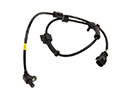 Dodge Grand Caravan Speed Sensor
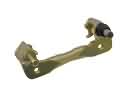 Dodge Grand Caravan Brake Caliper Bracket
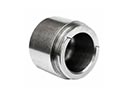 Dodge Grand Caravan Brake Caliper Piston
 Dodge Grand Caravan Brake Disc
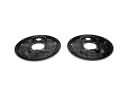 Dodge Grand Caravan Brake Dust Shield
 Dodge Grand Caravan Brake Line
 Dodge Grand Caravan Hydraulic Hose
 Dodge Grand Caravan Wheel Cylinder
 Dodge Grand Caravan Wheel Seal
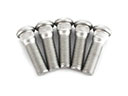 Dodge Grand Caravan Wheel Stud