JeepParts
My Garage
My Account
Cart
OEM Jeep Cherokee PCV Hose
PCV Valve Hose- Select Vehicle by Model
- Select Vehicle by VIN
Select Vehicle by Model
orMake
Model
Year
Select Vehicle by VIN
For the most accurate results, select vehicle by your VIN (Vehicle Identification Number).
1 PCV Hose found
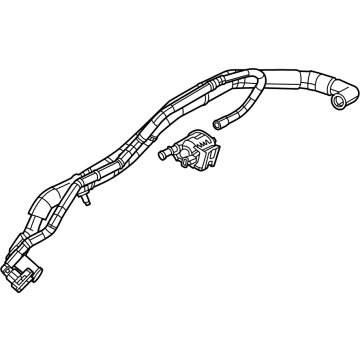
Jeep Cherokee PCV Hose Part Number: 68361280AC
$79.33 MSRP: $121.00You Save: $41.67 (35%)Ships in 1-2 Business Days
Jeep Cherokee PCV Hose
Choose OEM PCV Hose that meet Jeep factory standards. Jeep designs and tests every component for precision and durability. Each PCV Hose follows strict manufacturing steps to lock in quality and fit. If your Jeep Cherokee matters to you, OEM parts make the smart choice. You'll get the exact look, feel, and performance you expect. Shop genuine Cherokee parts at the highly competitive prices online. Enjoy a manufacturer's warranty, a hassle-free return policy, and rapid delivery. No more guesswork with off brands. Get genuine parts with exact fit and true factory performance. Shop with confidence today at JeepPartsDeal.com.
Cherokee PCV Hose is positioned right in the middle of a car that has gained a reputation in go anywhere confidence and the Jeep Cherokee has gained its cultish following due to its small size, solid unibody frame, and suspension that balances the city comfort with trail capability. Drivers like the Cherokee because it has light handling, four-wheel driving capability, and engines that produce lively torque during steep ascents and at the same time consume fuel in a responsible manner. State-of-the-art safety features, spacious seats, and automatic 9 speed transmission bring convenience on a daily basis and demonstrate that the engineering of Jeep can combine adventure and practicality. The PCV Hose has an equally important role in this trusted platform. A Jeep Cherokee hose connects the crankcase to the intake via PCV valve, which pulls blow by gases back into the cylinders to burn instead of venting them contributing to oil cleaner, emissions reduction, and to the seals not being over pressure. Due to the fact that it is designed to pass through narrow curves in the Cherokee engine bay, a good PCV Hose stands up to the heat and vibration and any broken line can soon agitate idle and fuel ratios, thus it would be prudent of every Jeep owner to check the PCV Hose on a regular basis. To install it is just necessary to cool the engine, release clamps, pull the brittle line, fit new hose firmly, reconnect clamps, start engine and check for leakages.
Related Jeep Cherokee Parts
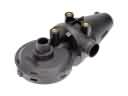 Jeep Cherokee PCV Valve
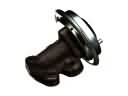 Jeep Cherokee EGR Valve
 Jeep Cherokee Exhaust Hanger
 Jeep Cherokee Tail Pipe
 Jeep Cherokee Vapor Canister
 Jeep Cherokee Exhaust Heat Shield
 Jeep Cherokee Air Injection Pump
 Jeep Cherokee Canister Purge Valve
 Jeep Cherokee Catalytic Converter Gasket
 Jeep Cherokee Crankcase Breather Hose
 Jeep Cherokee EGR Vacuum Solenoid
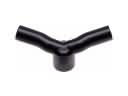 Jeep Cherokee PCV Valve Hose