JeepParts
My Garage
My Account
Cart
OEM Jeep Liberty Wheel Cylinder
Brake Wheel Cylinder- Select Vehicle by Model
- Select Vehicle by VIN
Select Vehicle by Model
orMake
Model
Year
Select Vehicle by VIN
For the most accurate results, select vehicle by your VIN (Vehicle Identification Number).
1 Wheel Cylinder found
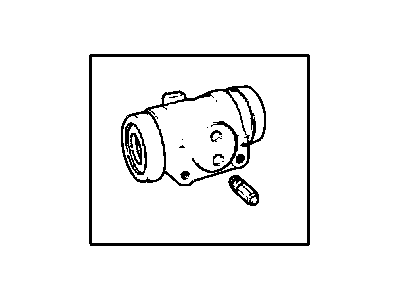
Jeep Liberty Wheel Cylinder Part Number: 5066158AA
$57.27 MSRP: $72.60You Save: $15.33 (22%)Ships in 1-2 Business Days
Jeep Liberty Wheel Cylinder
Choose OEM Wheel Cylinder that meet Jeep factory standards. Jeep designs and tests every component for precision and durability. Each Wheel Cylinder follows strict manufacturing steps to lock in quality and fit. If your Jeep Liberty matters to you, OEM parts make the smart choice. You'll get the exact look, feel, and performance you expect. Shop genuine Liberty parts at the highly competitive prices online. Enjoy a manufacturer's warranty, a hassle-free return policy, and rapid delivery. No more guesswork with off brands. Get genuine parts with exact fit and true factory performance. Shop with confidence today at JeepPartsDeal.com.
Wheel Cylinder used in Jeep Liberty cars is an important part of hydraulic drum brake system, whose principle is to push the brake shoes against the brake drum for proper stopping. It is hydraulic in operation which push the shoes outwards in a central cylinder through piston in contact with a drum. Jeep Liberty group of models has however used cast iron and aluminum wheel cylinders although the current models use the aluminum to prevent on rusting. The Wheel Cylinder, like any other mechanical structure, may develop some problems such as leakage or rusting thus affecting the braking power of the vehicle. Stopping distance Casco 185/65/R15 measures 44m, front braking: 144 mm new, rear braking: 126 mm new Upon inspection: front 115mm, rear 140 mm Necessary to inspect constantly, especially when fitting new linings, as new ones push pistons deeper into bores that may result in leaking. Even though the wheel cylinders can be rebuilt, one is encouraged to replace them, especially when there is severe wear and tear to enhance the safety of driving Jeep Liberty cars.
Jeep Liberty Wheel Cylinder Parts and Q&A
- Q:How to Service and Repair a Wheel Cylinder on Jeep Liberty?A:You should start by loosening and removing the wheel and tire and the Brake Drum before handling the wheel cylinder. Add a brake pedal prop rod and after that, remove the brake line from the wheel cylinder. Take out the return springs and pull the shoes off the cylinder push rods. Afterward, take out the cylinder bolts and lift off the cylinder from the support plate. For fuse blowing, first remove the push rods and their boots, then push the Pistons, cups and spring, press expander out of the cylinder bore and lastly remove the bleed screw. Clean your cylinder and pistons with either clean brake fluid or brake cleaner, not with cleaning agents designed for other uses and dry everything with compressed air. Check the stroke of the cylinder for areas of light and dark coloring, as that is normal and has no effect on its function; only replace the cylinder if the bore is scored, pitted or heavily corroded. You may polish the inside of the barrel with crocus cloth. Inspect the piston surfaces to ensure they are smooth and without scratches, scoring or corrosion and change out those that appear damaged or worn. Replace the old piston cups and spring and expander since they cannot be used again, but your existing dust boots may be kept if they are in fine shape. When assembling, use clean brake fluid to grease the wheel cylinder bore, pistons, piston cups and spring and expander. Placing the first piston in the cylinder, add the first cup afterwards, making sure the lip of the cup faces toward the center and the flat side is on the piston. After that, insert the spring and expander and then put in the additional piston cup and main piston. Put the boots onto the cylinder ends, put the push rods inside the boots and then add the cylinder bleed screw. When installing, secure the mounting bolts for the cylinder at 20 Nm (15 ft. lbs.), attach the new brake hose to the cylinder and fasten it at 14 Nm (124 inch lbs.) and fit the brake shoe springs. Take out the brake pedal prop rod, fit the brake drum and then put the wheel and tire assembly back on, before starting on the base brake bleeding process.
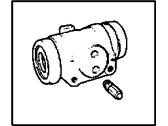
Related Jeep Liberty Parts
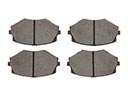 Jeep Liberty Brake Pads
 Jeep Liberty ABS Sensor
 Jeep Liberty Backing Plate
 Jeep Liberty Brake Caliper
 Jeep Liberty Brake Line
 Jeep Liberty Speed Sensor
 Jeep Liberty Brake Caliper Piston
 Jeep Liberty Brake Caliper Repair Kit
 Jeep Liberty Brake Dust Shields
 Jeep Liberty Brake Rotor
 Jeep Liberty Brake Shoe Set
 Jeep Liberty Parking Brake Shoes