JeepParts
My Garage
My Account
Cart
OEM 2001 Jeep Cherokee Rod Bearing
Engine Connecting Rod Bearing- Select Vehicle by Model
- Select Vehicle by VIN
Select Vehicle by Model
orMake
Model
Year
Select Vehicle by VIN
For the most accurate results, select vehicle by your VIN (Vehicle Identification Number).
1 Rod Bearing found
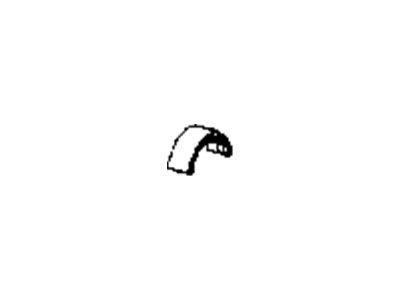
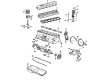
2001 Jeep Cherokee Rod Bearings Part Number: 83500300AC
$20.13 MSRP: $22.95You Save: $2.82 (13%)Ships in 1-2 Business DaysProduct Specifications- Other Name: Bearing Kit - Connecting Rod; Bearings; Bearing Kit Connecting Rod Standard
- Replaces: 83500300, 83500300AB, 53020261AC
- Item Weight: 0.50 Pounds
- Item Dimensions: 3.1 x 2.7 x 1.8 inches
- Condition: New
- Fitment Type: Direct Replacement
- SKU: 83500300AC
- Warranty: This genuine part is guaranteed by Mopar's factory warranty.
2001 Jeep Cherokee Rod Bearing Parts and Q&A
- Q: How to Ensure Proper Alignment and Wear of Rod Bearings on 2001 Jeep Cherokee?A: Check the rod bearing surfaces for telltale signs of scoring, bent tabs or abnormal wear, replace those that are damaged and leave behind the ones that aren't. Look for scoring, nicks or burrs on the connecting rod journals, since misaligned or bent rods can cause wear on pistons, piston rings, cylinder walls, connecting rod bearings and then the crankshaft connecting rod journals. Should wear marks or breaks in the connecting rod be visible, make sure it is properly aligned and change any bent, twisted or misaligned rods. For this measurement, wipe oil off the connecting rod journals, insert short rubber hose over the rod bolts before putting them in, grease the top bearing, install it on the rod, use a piston ring compressor and lift the entire engine block to insert and compress them. Attach the lower bearing insert to the bearing cap, dry it and place a strip of Plastigage across the center of the insert, making certain it does not break. Assemble both the bearing cap and connecting rod on the journal and use a torque wrench to tighten all the nuts to 45 Nm (33 ft. lbs.), while refusing to rotate the crankshaft so that the Plastigage stays clean. Take off the bearing cap and measure how much compressed Plastigage there is to find the clearance; if the measurements are not the same all around, this might mean the journal is tapered, the rod is bent or there is some foreign substance in the cap or rod's gap. If you find the clearance is correct, remove the Plastigage and go on to install; if it goes above the requirements, install two 0.0255 mm (0.001 inch) undersize bearing inserts, putting all the odd ones under the top insert and measure the clearance once again. The inserts are put in below the desired clearance and then, it is checked if new configurations are necessary. If we use an inset element that is 0.025 mm (0.001 inch) smaller, it drops down to 0.002 inch and if we go with a 0.051 mm (0.002 inch) smaller element, the clearance becomes 0.038 mm (0.0015 inch). Measure the Plastigage once more to confirm the bearing before you start final assembly and then choose the right insert, apply it and install the cap, using 45 Nm (33 ft. lbs.) to tighten the tread bolts. Place a fitted feeler gauge in the side space between the connecting rod and crankshaft flange and remove and replace the connecting rod if clearance falls outside the standards.
Related 2001 Jeep Cherokee Parts
 2001 Jeep Cherokee Camshaft
 2001 Jeep Cherokee Harmonic Balancer
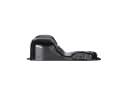 2001 Jeep Cherokee Oil Pan
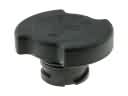 2001 Jeep Cherokee Oil Filler Cap
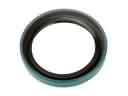 2001 Jeep Cherokee Crankshaft Seal
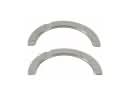 2001 Jeep Cherokee Crankshaft Thrust Washer Set
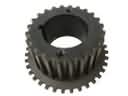 2001 Jeep Cherokee Crankshaft Timing Gear
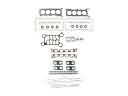 2001 Jeep Cherokee Cylinder Head Gasket
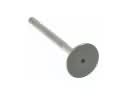 2001 Jeep Cherokee Exhaust Valve
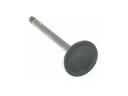 2001 Jeep Cherokee Intake Valve
 2001 Jeep Cherokee Rocker Arm
 2001 Jeep Cherokee Timing Cover