JeepParts
My Garage
My Account
Cart
OEM 2002 Jeep Wrangler Rod Bearing
Engine Connecting Rod Bearing- Select Vehicle by Model
- Select Vehicle by VIN
Select Vehicle by Model
orMake
Model
Year
Select Vehicle by VIN
For the most accurate results, select vehicle by your VIN (Vehicle Identification Number).
1 Rod Bearing found
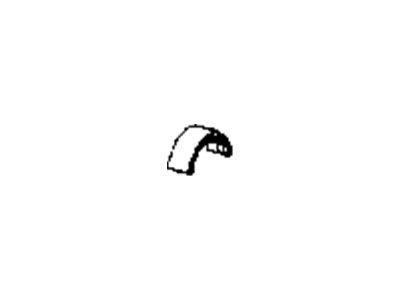
2002 Jeep Wrangler Rod Bearings Part Number: 83500300AC
$20.13 MSRP: $22.95You Save: $2.82 (13%)Ships in 1-2 Business DaysProduct Specifications- Other Name: Bearing Kit - Connecting Rod; Bearings; Bearing Kit Connecting Rod Standard
- Replaces: 83500300, 83500300AB, 53020261AC
- Item Weight: 0.50 Pounds
- Item Dimensions: 3.1 x 2.7 x 1.8 inches
- Condition: New
- Fitment Type: Direct Replacement
- SKU: 83500300AC
- Warranty: This genuine part is guaranteed by Mopar's factory warranty.
2002 Jeep Wrangler Rod Bearing Parts and Q&A
- Q: How to Inspect and Replace Rod Bearings for Optimal Performance on 2002 Jeep Wrangler?A: Review the rod bearings to check for sign of scoring, bent alignment tabs, wear in the usual spots, grooving, fatigue and pitting. If a bearing wears fast or unevenly, replace it and then check the rod journals for damage by scoring, nicking or burring. Improperly aligned connecting rods can cause unusual wear on pistons, piston rings, cylinder walls, connecting rod bearings and crankshaft connecting rod journals. So, always ensure that connecting rods are correctly aligned and remove and replace those that appear bent, twisted or misaligned. Clean off the oil from the connecting rod journal and use additional rubber hose parts on rod bolts when assembling. Apply lubricant to the upper bearing insert and then mount it in the connecting rod. Install the rod and piston assemblies by pressing them into the cylinder with the piston ring compressor, making sure the little oil squirting holes in the rod face the camshaft and the arrow at the front of the piston crown is pointed forward. Install the bottom bearing insert into the bearing cap, making sure it's dry and then put a piece of Plastigage over the full length of the bottom insert across the bearing cap's center. Attach the bearing cap and connecting rod to the journal, tighten nuts to 45 Nm (33 ft. lbs.) without turning the crankshaft so you do not smear the Plastigage. Open the bearing, measure the part of Plastigage showing after compression and check that the clearance is the same across the entire insert. Should the value be higher than specification, place 0.0254 mm (0.001 inch) undersize inserts between the bearing and the housing, align the odd size ones toward the bottom and repeat the measurement. With an initial clearance of 0.0762 mm (0.003 inch), if you use inserts that are 0.025 mm (0.001 inch) undersize, they will cause the clearance to fall to 0.002 inch. Even smaller 0.051 mm (0.002 inch) inserts might then drop the clearance to 0.038 mm (0.0015 inch). Do a check with Plastigage to make sure you have the right bearing, then set the chosen insert and put on the cap after tightening the screws to 45 Nm (33 ft.lbs.). Next, insert a tight feeler gauge between the rod and the crankshaft area in order to confirm that the fit is correct. If it is not, put in a new rod.
Related 2002 Jeep Wrangler Parts
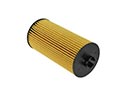 2002 Jeep Wrangler Oil Filter
 2002 Jeep Wrangler Oil Pan Gasket
 2002 Jeep Wrangler Cylinder Head
 2002 Jeep Wrangler Camshaft
 2002 Jeep Wrangler Coolant Filter
 2002 Jeep Wrangler Oil Filler Cap
 2002 Jeep Wrangler Timing Chain
 2002 Jeep Wrangler Cam Gear
 2002 Jeep Wrangler Crankshaft Thrust Washer Set
 2002 Jeep Wrangler Dipstick Tube
 2002 Jeep Wrangler Exhaust Valve
 2002 Jeep Wrangler Piston