JeepParts
My Garage
My Account
Cart
OEM Chrysler Prowler Air Bag
Air Bag Module- Select Vehicle by Model
- Select Vehicle by VIN
Select Vehicle by Model
orMake
Model
Year
Select Vehicle by VIN
For the most accurate results, select vehicle by your VIN (Vehicle Identification Number).
2 Air Bags found

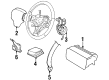
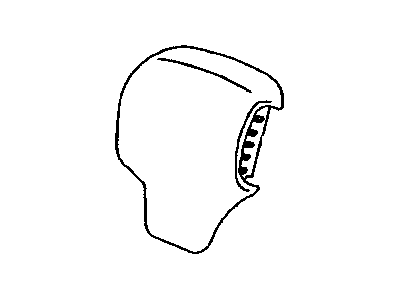
Chrysler Prowler Inflator Module, Driver Side Part Number: MB71JX8AD
Chrysler Prowler Air Bag
Choose OEM Air Bag that meet Chrysler factory standards. Chrysler designs and tests every component for precision and durability. Each Air Bag follows strict manufacturing steps to lock in quality and fit. If your Chrysler Prowler matters to you, OEM parts make the smart choice. You'll get the exact look, feel, and performance you expect. Shop genuine Prowler parts at the highly competitive prices online. Enjoy a manufacturer's warranty, a hassle-free return policy, and rapid delivery. No more guesswork with off brands. Get genuine parts with exact fit and true factory performance. Shop with confidence today at JeepPartsDeal.com.
Occupant safety during collisions receives substantial enhancement through the Chrysler Prowler Air Bag system that embodies reliability and performance features. The advanced airbag system combines four components including cushion, flexible fabric bag, inflation module and crash sensors to deploy the airbag quickly after an impact occurs. All occupants inside the Chrysler Prowler receive comprehensive safety protection through the implementation of different airbags consisting of driver and passenger airbags and side-impact modules. Security standards of the Chrysler Prowler reach new heights through its use of different airbag types including knee bolsters and side-curtain systems. Due to its crash sensors the system proves efficient by sending signals to its airbag electronic controller which ensures timely activation at collision time. Through its safety features the Chrysler Prowler Air Bag enables superior vehicle performance which keeps it a favored and efficient choice in automotive markets. Different Prowler models can use the Chrysler car Air Bag system because of its innovative design which prioritizes occupant safety. Both enhanced performance and safety characterize the the automaker model because its exclusive features are supported by the airbag system which adds to the vehicle's appealing design elements and formidable engine output.
Chrysler Prowler Air Bag Parts and Q&A
- Q: How to Safely Remove a Deployed Driver Air Bag on Chrysler Prowler?A:Always put on rubber gloves, eye protection and a shirt with sleeves when defusing or removing an air bag, because there may be substances on its surface that can harm your skin. The first step is to separate and cut off the negative cable of the battery. Subsequently, came out the three bolts holding the driver air bag to either side of the steering wheel. Before pulling the driver air bag out, cut the squib wire and horn wire from its base. Should you be looking to replace a driver air bag that has been deployed, you need to also replace the Clock Spring, according to instructions from Electrical and Restraints. Press straight down on the squib wire connector with a finger so that it clicks into the air bag connector. After that, join the horn wire and fasten the three bolts, turning them until the torque reads 10 to 11 Nm (90 to 100 in. lbs.). It is crucial not to connect the battery negative cable until the air bag system has been diagnosed and tested.
- Q: How to Safely Handle the Removal and Installation of a Passenger Air Bag on Chrysler Prowler?A:First, disconnect and separate the negative cable from the battery to safely take out a non-deployed passenger air bag. After that, raise the air bag ECU until you can find the wire connector, unlock the red hook and then push it down to free the wire connector from the air bag. Open the glove box and the check cables will now drop which will allow the vehicle to go down. After removing the two screws found in the glove opening and the two nuts through the top cover access you can get to the passenger air bag. Because air bags may contain irritants, you should wear rubber gloves, eye protection and a long-sleeved shirt before handling them. Separate the negative Battery Cable, gently fold or roll the air bag toward the dashboard and remove the upper panel cover from the instrument cluster. Pull up the air bag to access the wire connector at its top; take off the 6-way connector, open the glove box, release the cables and get rid of the two screws and two nuts as before. To fit a non-deployed air bag, place it against the bottom of the instrument panel, put the two attaching nuts in the top hatch opening and insert the two attaching screws at the bottom through the opening of the glove box, tightening them to a range of 9.6 to 12 Nm (85 to 105 in. lbs.) torque. Attach the glove box door check cables, shut the door, plug the 6-way wire connector into the air bag with the red locking tab in the lock hole and fasten the instrument panel top cover. If the air bag has been deployed, see if there are any broken or damaged parts, making the necessary repairs or replacements, before installing it as described. Never connect the negative battery cable until the air bag system has been diagnosed and checked by a specialist.
Related Chrysler Prowler Parts
 Chrysler Prowler Air Bag Control Module
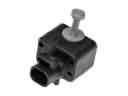 Chrysler Prowler Air Bag Sensor
 Chrysler Prowler Antenna Cable
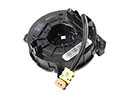 Chrysler Prowler Clock Spring
 Chrysler Prowler Engine Control Module
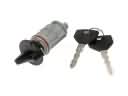 Chrysler Prowler Ignition Lock Assembly
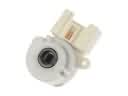 Chrysler Prowler Ignition Switch
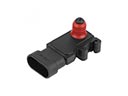 Chrysler Prowler MAP Sensor
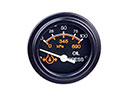 Chrysler Prowler Oil Pressure Gauge
 Chrysler Prowler Seat Belt
 Chrysler Prowler Transmitter
 Chrysler Prowler Wiper Switch