JeepParts
My Garage
My Account
Cart
OEM Dodge Stratus Exhaust Resonator
Muffler- Select Vehicle by Model
- Select Vehicle by VIN
Select Vehicle by Model
orMake
Model
Year
Select Vehicle by VIN
For the most accurate results, select vehicle by your VIN (Vehicle Identification Number).
4 Exhaust Resonators found
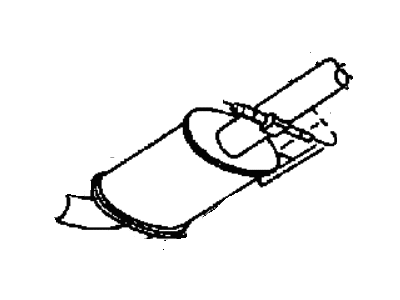
Dodge Stratus Resonator W/Pipe Part Number: 4764336AB
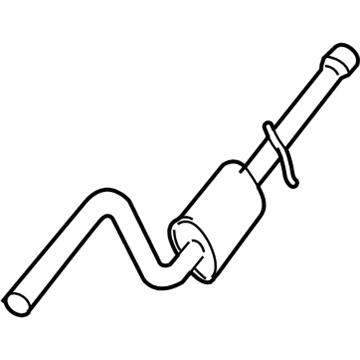
Dodge Stratus Resonator & Pipe Part Number: 4764607AD

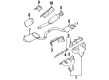
Dodge Stratus Pipe W/Resonator Part Number: 4764338AB
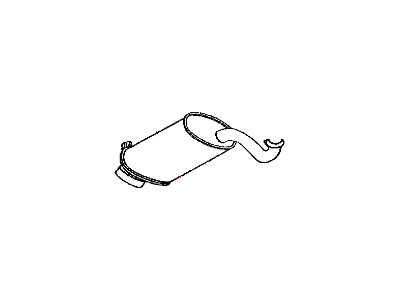
Dodge Stratus Resonator W/Pipe Part Number: 4764317AC
Dodge Stratus Exhaust Resonator
Choose OEM Exhaust Resonator that meet Dodge factory standards. Dodge designs and tests every component for precision and durability. Each Exhaust Resonator follows strict manufacturing steps to lock in quality and fit. If your Dodge Stratus matters to you, OEM parts make the smart choice. You'll get the exact look, feel, and performance you expect. Shop genuine Stratus parts at the highly competitive prices online. Enjoy a manufacturer's warranty, a hassle-free return policy, and rapid delivery. No more guesswork with off brands. Get genuine parts with exact fit and true factory performance. Shop with confidence today at JeepPartsDeal.com.
Dodge Stratus Exhaust Resonator Parts and Q&A
- Q:How to service and repair an Exhaust Resonator on Dodge Stratus?A:To service and repair the exhaust resonator, allow the exhaust system to cool as they run hot. Near the catalytic converter is especially hot. Initially, the vehicle is raised on a hoist. Penetrating oil is applied to the band clamps of components to be removed. Next, detach the muffler/pipe assembly and loosen the band clamp of the resonator/pipe assembly and remove it. When replacing a band clamp, grind off the spot weld from the exhaust pipe since band clamps are spot welded to the exhaust system. It is vital to utilize those original equipment parts or their equivalents when replacing any component of the exhaust system to guarantee proper alignment. Similarly, acceptable exhaust noise levels and no changes in exhaust system back pressure must be ensured as well. In fact, such things could influence the emissions and performance of your automobile. To install the exhaust assembly, work from the front to the back while aligning and tightening the various components. After the resonator/pipe assembly and muffler/pipe assembly have been installed loosely, install the support isolators onto the muffler supports. Position both assemblies properly so that there is clearance with the underbody parts and the loads on all support isolators are equal. Ensure each band clamp is adjusted to 54 Nm (40 ft. lbs.) for both the resonator/pipe assembly and muffler/pipe assembly. A connection is done with a ground strap to the muffler. Lower the vehicle when the engine running to check for an exhaust leak and repair it if any found. Ultimately, inspect the exhaust system for contact with body panels and adjust if required.
Related Dodge Stratus Parts
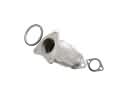 Dodge Stratus Catalytic Converter
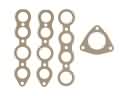 Dodge Stratus Exhaust Manifold
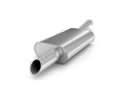 Dodge Stratus Muffler
 Dodge Stratus Catalytic Converter Gasket
 Dodge Stratus Diverter Valve
 Dodge Stratus Exhaust Flange Gasket
 Dodge Stratus Exhaust Hanger
 Dodge Stratus Exhaust Heat Shield
 Dodge Stratus Exhaust Manifold Gasket
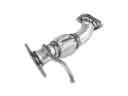 Dodge Stratus Exhaust Pipe
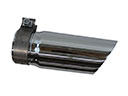 Dodge Stratus Exhaust Tip
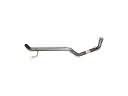 Dodge Stratus Tail Pipe