JeepParts
My Garage
My Account
Cart
OEM 2006 Dodge Stratus Parking Brake Cable
Emergency Parking Brake Release Cable- Select Vehicle by Model
- Select Vehicle by VIN
Select Vehicle by Model
orMake
Model
Year
Select Vehicle by VIN
For the most accurate results, select vehicle by your VIN (Vehicle Identification Number).
1 Parking Brake Cable found
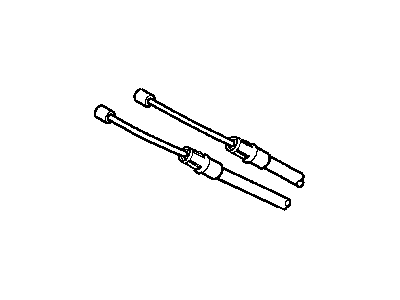

2006 Dodge Stratus Cable Part Number: 4779287AB
Product Specifications- Other Name: Cable - Parking Brake; Brake Cable; Cable Parking Brake
- Item Weight: 2.40 Pounds
- Item Dimensions: 18.5 x 1.8 x 1.8 inches
- Condition: New
- Fitment Type: Direct Replacement
- SKU: 4779287AB
- Warranty: This genuine part is guaranteed by Mopar's factory warranty.
2006 Dodge Stratus Parking Brake Cable Parts and Q&A
- Q: How to Maintain the Left or Right Rear Parking Brake Cable on 2006 Dodge Stratus?A: Before working on the parking brake cables, take the center floor console out and push down the park brake lever handle. Unscrew the adjusting nut on the park brake cable output cable to take slack out of the cable, so you can easily remove the rear park brake cables from the tension equalizer. Remove the parking brake cable that needs service from the tension equalizer. After that, take out the rear seat cushion and scuff plates from both right and left rear door sills which are secured with clips. First, pull the rear carpeting forward and then, with a 12 point 1/2 inch or 13 mm box wrench, press the tabs on the parking brake cable to let it slide out of the console bracket. Beneath the carpet, reach in and detach the park brake cable housing straight from the console bracket. Jack up your car and take the whole rear wheel and tire assembly off. For vehicles that have rear disc brakes, take out the caliper, rotor, hub and bearing and the parking brake shoes. On vehicles with rear drum brakes, remove the hub and bearing dust cap, plus the retaining nut and slide the hub and bearing off the spindle. Remove the parking brake cable from the lever and from the rear side of the brake system, pressing on the locking tabs on the retainer with a 1/2 inch or 13 mm box wrench or a screwdriver. Pull out the screws connecting the two cable routing clips to the frame rail and remove the parking brake cable with the sealing grommet from the floor pan. Before installing the cable, place it into the slot in the floor pan and make sure the sealing grommet is in position. Then take the cable to the rear disc brake adapter or drum support, seat the locking tabs and push the cable into its place. Set both parking brake cable routing clips on the rear frame rail and attach them using the specified screws. Join the end of the cable to the actuating lever for the parking brake and make certain the spring goes underneath the retaining tab. In case of rear disc brakes, set up and adjust the parking brake shoes and push on the hub and bearing, rotor and caliper. For rear drum brake vehicles, push the cable into the cable guide on top of the anchor retaining plate, slide the hub and bearing onto the spindle, install the retaining nut and tighten to 250 Nm (185 ft. lbs.) before putting on the dust cap. Fit the rear wheel and tire on again and screw each lug nut a little, making sure they are crossed in a different way, then tighten all of them to the correct torque of 135 Nm (100 ft. lbs.). Drop the car and watch the parking brake cable as it should fit all the way into the floor beneath the vehicle. Make sure your cable fits under the carpeting, runs into the cable hole and attaches into the bracket, expanding the locking tabs on the cable retainer. After removing the output cable and the retaining clip and tension equalizer, install a new tension equalizer and a new retaining clip when you replace the rear park brake cable. Fix the parking brake output cable retainer open using a screwdriver, remove both together and dispose of them. Attach a new park brake cable tension equalizer on the cable from the park brake lever and during installation be sure to fit a new retainer to prevent it from separating from the tension equalizer. After running your new cable through the tension equalizer, snap it into place on the retaining clip that holds it. Place the parking brake lever all the way back, tighten the adjusting nut until 26 millimeters of thread are showing, then use the lever to put pressure on the brake, then return it. Lift the parking brake lever completely and watch to make certain the rear wheels move freely. At the same time, press the lever down and check that it works with a strong feeling and has only up to 15 clicks of movement. The last step is to put in the center floor console, both rear door sill plate moldings, the rear carpeting and the lower rear seat cushion.
Related 2006 Dodge Stratus Parts
 2006 Dodge Stratus Brake Caliper
 2006 Dodge Stratus Brake Caliper Bracket
 2006 Dodge Stratus Brake Caliper Piston
 2006 Dodge Stratus Brake Disc
 2006 Dodge Stratus Brake Drum
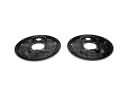 2006 Dodge Stratus Brake Dust Shield
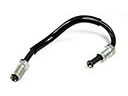 2006 Dodge Stratus Brake Line
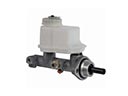 2006 Dodge Stratus Brake Master Cylinder
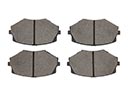 2006 Dodge Stratus Brake Pad
 2006 Dodge Stratus Speed Sensor
 2006 Dodge Stratus Wheel Bearing Dust Cap
 2006 Dodge Stratus Wheel Cylinder