JeepParts
My Garage
My Account
Cart
OEM Dodge Avenger Parking Brake Cable
Emergency Parking Brake Release Cable- Select Vehicle by Model
- Select Vehicle by VIN
Select Vehicle by Model
orMake
Model
Year
Select Vehicle by VIN
For the most accurate results, select vehicle by your VIN (Vehicle Identification Number).
7 Parking Brake Cables found
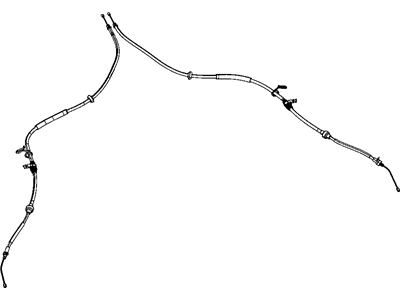
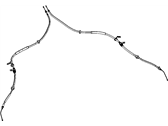
Dodge Avenger Cable Part Number: 5085747AH
$48.85 MSRP: $71.70You Save: $22.85 (32%)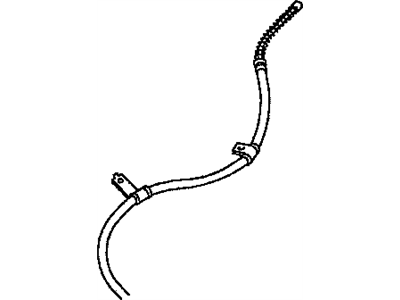

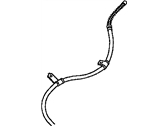
Dodge Avenger Cable Part Number: MR205956
$6.73 MSRP: $8.54You Save: $1.81 (22%)Ships in 1-2 Business DaysDodge Avenger Cable Part Number: MR205957
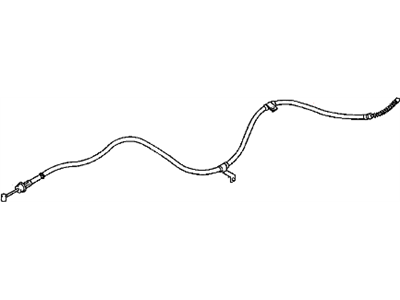
Dodge Avenger Cable Part Number: MR128339
Dodge Avenger Cable Part Number: 5085745AE
Dodge Avenger Cable Part Number: 5085744AE
Dodge Avenger Cable Part Number: 5085746AG
Dodge Avenger Parking Brake Cable
Choose OEM Parking Brake Cable that meet Dodge factory standards. Dodge designs and tests every component for precision and durability. Each Parking Brake Cable follows strict manufacturing steps to lock in quality and fit. If your Dodge Avenger matters to you, OEM parts make the smart choice. You'll get the exact look, feel, and performance you expect. Shop genuine Avenger parts at the highly competitive prices online. Enjoy a manufacturer's warranty, a hassle-free return policy, and rapid delivery. No more guesswork with off brands. Get genuine parts with exact fit and true factory performance. Shop with confidence today at JeepPartsDeal.com.
Parking brake cable is a critical factor with regards to the functionality of the Dodge Avenger models and thus the Dodge Avenger Parking Brake Cable is crucial. This critical part links the parking brake to the car's braking system; it makes the car secure in that it cannot move especially on inclined stands; in this way it improves efficiency and safety of the Dodge Avenger. This Dodge Avenger Parking Brake Cable is suitable for different model of Avenger hence can be recommended to any car owner who wants to enhance his/her car's integrity. An efficient Parking Brake Cable is essential as signs of the parking brake cable necessitating repairs include, failure of the parking brake and the warning light turning on. In addition to this, timely servicing of the Dodge Avenger Parking Brake Cable plays an important role in the car's performance as well as safety feature. In the Dodge avenger parking brake cable there are some important features which are uncommon in other automotive: The construction and design of this Dodge avenger part is especially developed for better and more durable performance of cable during daily runs. Thanks to its combo of power and economy, the Dodge Avenger respond positively to this rather important Parking Brake Cable. Thus, it can be said that the Dodge Avenger Parking Brake Cable is one of the best additions to this car model because it makes driving safer and provide urge to owners the guaranteed top performance cars.
Dodge Avenger Parking Brake Cable Parts and Q&A
- Q:How is the Parking Brake Cable Installed on Dodge Avenger?A:First, push the parking brake cable through the hole in the floor pan, making certain the cable's sealing grommet is in place. Over the stud on the body, fit the first routing clamp and then install the nut on it. Use the other routing clamp to hold the cable in place and secure it with the screw. Lay the cable over the hole where it should attach on the trailing link and support plate, holding it with a hair pin. Put back the Parking Brake Shoes that were removed, then attach the tire and its wheel so the wheel nuts are tightened to 135 Nm (100 ft. lbs.). Make sure the vehicle is on the ground and use brick shims under the wheel assemblies to help prevent them from rolling. After the seal grommet is placed firmly in the floor pan, feed the cable under the carpet to the bracket and pass it through the hole until you hear the locking fingers work. During installation, the new cable equalizer needs to have its bent nail tensioner stretched so the tension is accurate. Unbolt the previous equalizer and replace it with the new one at the parking brake lever output cable and bring the rear parking brake cables to the equalizer and make sure they slots in the right place. Once the adjustment nut is tight, use the parking brake lever once to stretch the equalizer, then place the lever in its fully released position and tighten the adjusting nut until you can see 22 millimeters of thread. Operate the lever a second time and lift the vehicle up high enough so the rear wheels lift off the ground and spin properly. After setting the parking brake, check that the rear wheels will not rotate and watch as the wheels rotate when the lever is back in its released position. Simply put on the parking brake once more, lower the car down, reset the center console, roll up the cords and screw on the battery negative cable.
- Q:How to Service and Repair a Parking Brake Cable on Dodge Avenger?A:For parking brake cable service and repair, take off the rear brake assembly and suspend it with wire or a similar object. After that, take apart the shoe and lining assembly to free the shoe hold-down cup. During installation, make certain the shoe adjusting bolt for the left wheel is in front of the vehicle and the bolt for the right wheel is at the rear. Recognize that the spring load is not the same for each of the shoe-to-anchor springs; the spring in the diagram is painted to be quickly recognized; note that the right wheel place is the same as the left.
Related Dodge Avenger Parts
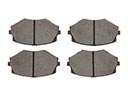 Dodge Avenger Brake Pads
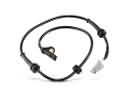 Dodge Avenger ABS Sensor
 Dodge Avenger Brake Caliper
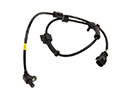 Dodge Avenger Speed Sensor
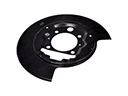 Dodge Avenger Backing Plate
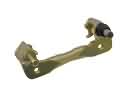 Dodge Avenger Brake Caliper Bracket
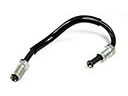 Dodge Avenger Brake Line
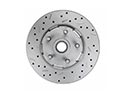 Dodge Avenger Brake Rotor
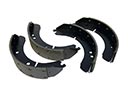 Dodge Avenger Brake Shoe Set
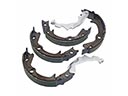 Dodge Avenger Parking Brake Shoes
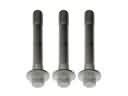 Dodge Avenger Wheel Hub Bolt
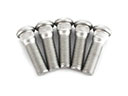 Dodge Avenger Wheel Stud