JeepParts
My Garage
My Account
Cart
OEM 2000 Jeep Wrangler Exhaust Pipe
Exhaust Tail Pipe- Select Vehicle by Model
- Select Vehicle by VIN
Select Vehicle by Model
orMake
Model
Year
Select Vehicle by VIN
For the most accurate results, select vehicle by your VIN (Vehicle Identification Number).
7 Exhaust Pipes found
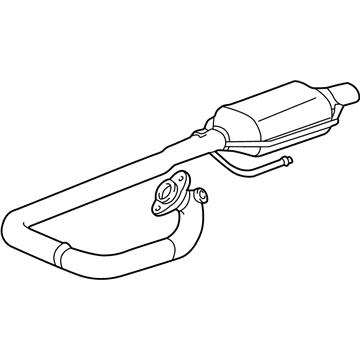
2000 Jeep Wrangler Catalytic Converter Part Number: 5114461AA
Product Specifications- Other Name: Pipe - Catalytic; Exhaust Pipe; Converter & Pipe
- Replaces: 52101270AB
- Item Weight: 32.90 Pounds
- Condition: New
- Fitment Type: Direct Replacement
- SKU: 5114461AA
- Warranty: This genuine part is guaranteed by Mopar's factory warranty.
2000 Jeep Wrangler Converter & Pipe Part Number: 5114460AA
Product Specifications- Other Name: Pipe - Catalytic; Catalytic Converter; Exhaust Pipe
- Item Weight: 10.40 Pounds
- Item Dimensions: 49.9 x 17.2 x 12.1 inches
- Condition: New
- Fitment Type: Direct Replacement
- SKU: 5114460AA
- Warranty: This genuine part is guaranteed by Mopar's factory warranty.
2000 Jeep Wrangler Catalytic Converter Part Number: 5114459AA
Product Specifications- Other Name: Pipe - Catalytic; Exhaust Pipe; Converter & Pipe
- Item Weight: 29.80 Pounds
- Item Dimensions: 49.5 x 23.1 x 16.6 inches
- Condition: New
- Fitment Type: Direct Replacement
- SKU: 5114459AA
- Warranty: This genuine part is guaranteed by Mopar's factory warranty.
2000 Jeep Wrangler Converter & Pipe Part Number: 5114458AA
Product Specifications- Other Name: Pipe - Catalytic; Catalytic Converter; Exhaust Pipe
- Item Weight: 21.00 Pounds
- Item Dimensions: 53.4 x 22.0 x 17.3 inches
- Condition: New
- Fitment Type: Direct Replacement
- SKU: 5114458AA
- Warranty: This genuine part is guaranteed by Mopar's factory warranty.
2000 Jeep Wrangler Catalytic Converter Part Number: 52101267AA
Product Specifications- Other Name: Pipe - Exhaust; Exhaust Pipe; Converter & Pipe
- Item Weight: 26.50 Pounds
- Item Dimensions: 44.1 x 22.4 x 13.9 inches
- Condition: New
- Fitment Type: Direct Replacement
- SKU: 52101267AA
- Warranty: This genuine part is guaranteed by Mopar's factory warranty.
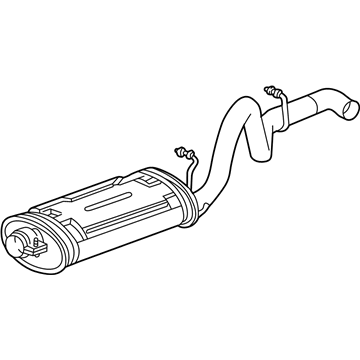
2000 Jeep Wrangler Muffler W/Tpipe Part Number: 52019241AF
Product Specifications- Other Name: Muffler - Exhaust; Exhaust Muffler; Exhaust Pipe; Resonator; Muffler; Muffler And Tailpipe Exhaust
- Item Weight: 57.90 Pounds
- Item Dimensions: 78.8 x 19.2 x 12.2 inches
- Condition: New
- Fitment Type: Direct Replacement
- SKU: 52019241AF
- Warranty: This genuine part is guaranteed by Mopar's factory warranty.
2000 Jeep Wrangler Catalytic Converter Part Number: 52101268AA
Product Specifications- Other Name: Pipe; Exhaust Pipe; Converter & Pipe; Pipe And Converter Exhaust
- Item Weight: 27.30 Pounds
- Condition: New
- Fitment Type: Direct Replacement
- SKU: 52101268AA
- Warranty: This genuine part is guaranteed by Mopar's factory warranty.
2000 Jeep Wrangler Exhaust Pipe Parts and Q&A
- Q: How to Ensure Safety and Proper Installation with Your Exhaust Pipe on 2000 Jeep Wrangler?A: Before working on the exhaust, wait for it to cool down properly; the catalytic converter section of the exhaust may become very hot very quickly. Do not put torches near fuel lines to stay away from risk. Prior to starting, disconnect the oxygen sensor connector(s) so you don't harm the wires or sensor. Elevate the vehicle, so you can access the exhaust pipe, saturate the studs and nuts with Mopar(r) rust penetrant and wait around 5 minutes for it to get into the nuts. Get rid of the oxygen sensors from the exhaust pipe and catalytic converter, separate the exhaust pipe from the engine exhaust manifold, lift up the transmission and take apart the rear crossmember. Take off the clamp from between the catalytic converter and the muffler and then use an acetylene torch to heat that part of the connection until it's red hot, all the while shifting the muffler assembly to help it come loose from the converter. When fitting the units together, keep the catalytic converter and muffler loose, use a fresh clamp and make sure the nut is secured to 48 Nm (35 ft. lbs.) of torque. Bring the exhaust pipe to the engine's exhaust manifold and turn 31 Nm (23 ft. lbs.) of torque onto the nuts. Secure the rear crossmember to the car by tightening the crossmember-to-sill bolts to 41 Nm (30 ft. lbs.). After that, pull out the support for the transmission. Before installing the sensors, cover them with anti-seize compound, install them in place and tighten the mounting nut using a 30 Nm (22 ft. lbs.) torque wrench. Once done, put your car back on the ground, start it and look for exhaust leaks or points of contact between the exhaust and the bodywork.
Related 2000 Jeep Wrangler Parts
 2000 Jeep Wrangler Muffler
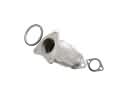 2000 Jeep Wrangler Catalytic Converter
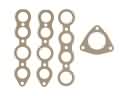 2000 Jeep Wrangler Exhaust Manifold
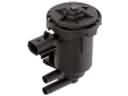 2000 Jeep Wrangler Canister Purge Valve
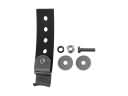 2000 Jeep Wrangler Exhaust Hanger
 2000 Jeep Wrangler Exhaust Heat Shield
 2000 Jeep Wrangler Exhaust Manifold Gasket
 2000 Jeep Wrangler Tail Pipe
 2000 Jeep Wrangler Vapor Canister
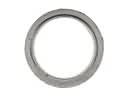 2000 Jeep Wrangler Exhaust Seal Ring