JeepParts
My Garage
My Account
Cart
OEM 2001 Dodge Dakota Intake Manifold
Engine Intake Manifold- Select Vehicle by Model
- Select Vehicle by VIN
Select Vehicle by Model
orMake
Model
Year
Select Vehicle by VIN
For the most accurate results, select vehicle by your VIN (Vehicle Identification Number).
3 Intake Manifolds found
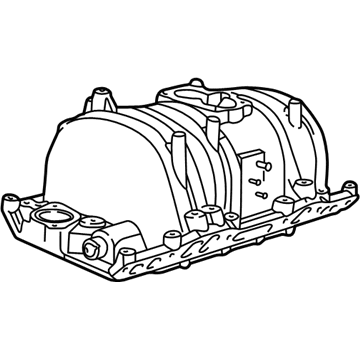
2001 Dodge Dakota Intake Manifold Part Number: 4897489AB
Product Specifications- Other Name: Manifold - Intake; Engine Intake Manifold; Manifold Intake
- Item Weight: 3.20 Pounds
- Item Dimensions: 18.2 x 18.2 x 10.2 inches
- Condition: New
- Fitment Type: Direct Replacement
- SKU: 4897489AB
- Warranty: This genuine part is guaranteed by Mopar's factory warranty.
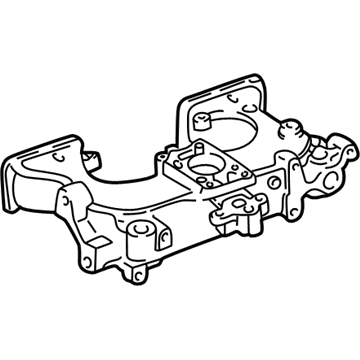

2001 Dodge Dakota Intake Manifold Part Number: 53010245
Product Specifications- Other Name: Manifold - Intake; Engine Intake Manifold; Manifold, Intake; Manifold Intake
- Item Weight: 7.50 Pounds
- Item Dimensions: 14.2 x 11.1 x 7.5 inches
- Condition: New
- Fitment Type: Direct Replacement
- SKU: 53010245
- Warranty: This genuine part is guaranteed by Mopar's factory warranty.
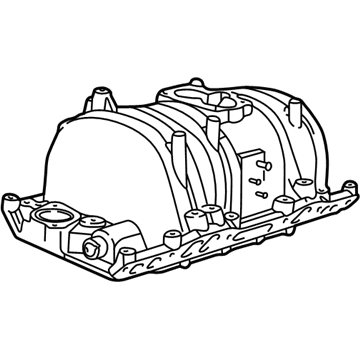
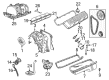
2001 Dodge Dakota Intake Manifold Part Number: 4897490AC
Product Specifications- Other Name: Manifold - Intake; Engine Intake Manifold; Manifold Intake
- Condition: New
- Fitment Type: Direct Replacement
- SKU: 4897490AC
- Warranty: This genuine part is guaranteed by Mopar's factory warranty.
2001 Dodge Dakota Intake Manifold Parts and Q&A
- Q: How to Remove and Install an Intake Manifold on 2001 Dodge Dakota?A: Before trying to take out the intake manifold, first disconnect the battery's negative cable and empty the cooling system. After that, take out the air inlet hose and resonator from the throttle body and air cleaner. Lower the tension on the accessory drive belt and pull it away from the power steering pump, then get rid of the pump and brackets from the water pump and intake manifold, placing them out of harm's way. Let the pressure out of the fuel system, unplug the tube from the fuel rail and remove the accelerator cable, cruise control cable and transmission push cable (if available) from the throttle body, holding down each connector only with your fingers when disconnecting the cruise control connector. Unplug all electrical cables from the throttle position sensor, idle air control motor, engine coolant temperature sensor at the thermostat, air temperature sensor, fuel injectors and oxygen sensor and pull the cables back so they're away from the exhaust manifold. On the intake manifold, disconnect the Crankcase Ventilation (CCV) vacuum hose, the Manifold Absolute Pressure (MAP) sensor vacuum hose connector, the vacuum hose from the vacuum port and the CCV hose at the cylinder head cover. Took off the vacuum hose and the intake manifold hose from the engine. Carefully remove bolts 2 through 5 from the intake manifold to the cylinder head, loosen bolt No.1 a bit, loosen nuts 6 and 7 and remove the intake manifold and gaskets, making sure to drain coolant as you do. When putting in the engine, be sure to clean the intake manifold and cylinder head mating parts, so no foreign matter gets inside. Place the new gasket over the locating dowels, position the manifold and simply hold down each of the mounting bolts with your fingers. Apply torque as described: Fasteners No.1 and 41 Nm (30 ft. lbs.), Fasteners Nos.2 through 5 and 31 Nm (23 ft. lbs.) and Fasteners Nos.6 and 7 and 23 Nm (17 ft. lbs.). Put the fuel supply tube into the fuel rail inlet and secure it and mount the molded vacuum hose onto the vacuum port of the intake manifold and another on the cylinder head cover. Plug the electrical connectors again for the throttle position sensor, idle air control motor, coolant temperature sensor, fuel injectors, air manifold temperature sensor and oxygen sensor. Screw the CCV vacuum hose and MAP sensor vacuum hose from the throttle body into each connector and then hook up the power steering pump and bracket to the water pump and intake manifold. Connect the three power steering pump to throttle body tensioner bracket bolts and the two water pump bracket tensioner bolts to the engine. Tighten the bolts connecting the pump to the tensioner to the water pump bolts to a torque of 28 Nm (21 ft. lbs.). First, install the accelerator cable, cruise control cable and transmission line pressure cable on the hold-down bracket and throttle lever and then fit and align the accessory drive belt on the engine to zero the risk of overheating. Make sure the air inlet hose and resonator are hooked to the throttle body and air cleaner at 4 Nm (35 in. lbs.). Then, reconnect the battery negative cable, power up the engine and look for leaks.
Related 2001 Dodge Dakota Parts
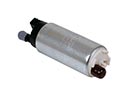 2001 Dodge Dakota Fuel Pump
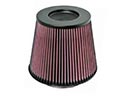 2001 Dodge Dakota Air Filter
 2001 Dodge Dakota Fuel Injector
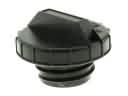 2001 Dodge Dakota Gas Cap
 2001 Dodge Dakota Throttle Body
 2001 Dodge Dakota Fuel Tank Strap
 2001 Dodge Dakota Air Duct
 2001 Dodge Dakota Air Filter Box
 2001 Dodge Dakota Air Intake Coupling
 2001 Dodge Dakota Cruise Control Servo
 2001 Dodge Dakota Fuel Tank Skid Plate
 2001 Dodge Dakota Intake Manifold Gasket