JeepParts
My Garage
My Account
Cart
OEM 2006 Chrysler PT Cruiser Exhaust Pipe
Exhaust Tail Pipe- Select Vehicle by Model
- Select Vehicle by VIN
Select Vehicle by Model
orMake
Model
Year
Select Vehicle by VIN
For the most accurate results, select vehicle by your VIN (Vehicle Identification Number).
10 Exhaust Pipes found
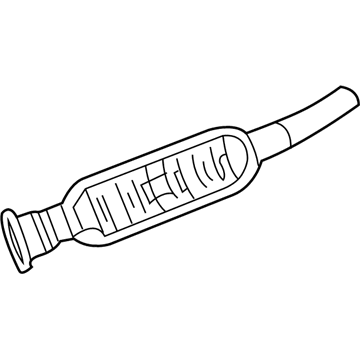
2006 Chrysler PT Cruiser Catalytic Converter Part Number: 5085905AC
$3227.38 MSRP: $4695.00You Save: $1467.62 (32%)Ships in 1-3 Business DaysProduct Specifications- Other Name: Converter - Catalytic; Converter; Converter Catalytic
- Item Weight: 15.30 Pounds
- Item Dimensions: 38.2 x 6.7 x 9.3 inches
- Condition: New
- Fitment Type: Direct Replacement
- SKU: 5085905AC
- Warranty: This genuine part is guaranteed by Mopar's factory warranty.
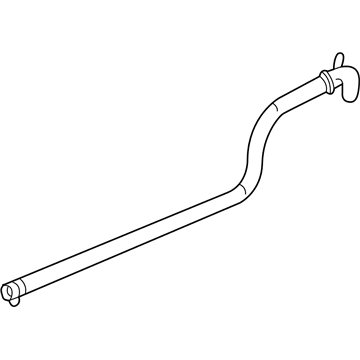
2006 Chrysler PT Cruiser Exhaust Pipe Part Number: 5278194AC
$192.03 MSRP: $291.00You Save: $98.97 (35%)Ships in 1-2 Business DaysProduct Specifications- Other Name: Pipe - Exhaust Extension; Direct-Fit Exhaust; Exhaust System Kit; Intermed Pipe; Pipe Exhaust Extension
- Item Weight: 9.70 Pounds
- Item Dimensions: 93.5 x 21.1 x 4.4 inches
- Condition: New
- Fitment Type: Direct Replacement
- SKU: 5278194AC
- Warranty: This genuine part is guaranteed by Mopar's factory warranty.
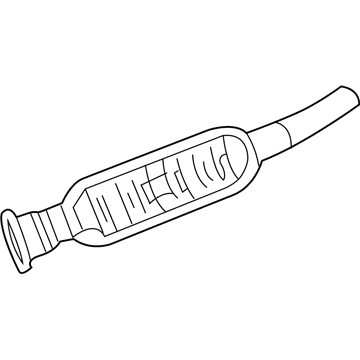
2006 Chrysler PT Cruiser Catalytic Converter Part Number: 5085700AB
Product Specifications- Other Name: Converter - Catalytic; Converter; Converter Catalytic
- Item Weight: 14.00 Pounds
- Item Dimensions: 38.1 x 9.3 x 6.1 inches
- Condition: New
- Fitment Type: Direct Replacement
- SKU: 5085700AB
- Warranty: This genuine part is guaranteed by Mopar's factory warranty.
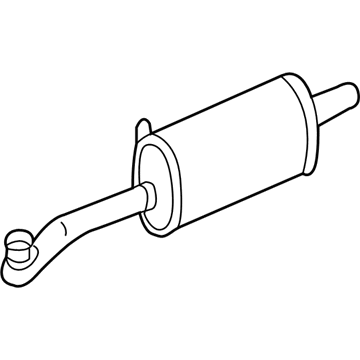
2006 Chrysler PT Cruiser Muffler Part Number: 5278195AG
Product Specifications- Other Name: Muffler - Exhaust; Exhaust Muffler; Exhaust Muffler Assembly; Direct-Fit Exhaust; Exhaust System Kit; Resonator; Muffler And Tailpipe Exhaust; Muffler Exhaust
- Replaces: 5278195AD, 5278195AC, 5278195AF, 5278195AE
- Item Weight: 17.80 Pounds
- Item Dimensions: 38.9 x 20.4 x 8.2 inches
- Condition: New
- Fitment Type: Direct Replacement
- SKU: 5278195AG
- Warranty: This genuine part is guaranteed by Mopar's factory warranty.
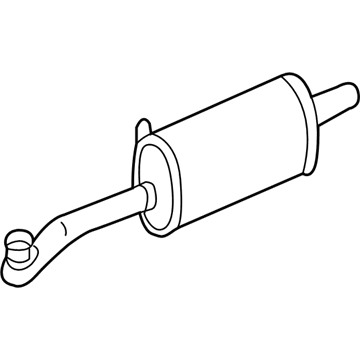
2006 Chrysler PT Cruiser Muffler Part Number: 5278503AH
Product Specifications- Other Name: Muffler - Exhaust; Exhaust Muffler; Direct-Fit Exhaust; Exhaust System Kit; Resonator; Muffler Exhaust
- Replaces: 5278503AF, 5278503AC, 5278503AD, 5278503AG, 5278503AE
- Item Weight: 18.20 Pounds
- Item Dimensions: 37.7 x 18.6 x 9.7 inches
- Condition: New
- Fitment Type: Direct Replacement
- SKU: 5278503AH
- Warranty: This genuine part is guaranteed by Mopar's factory warranty.
2006 Chrysler PT Cruiser Muffler Part Number: 5290586AD
Product Specifications- Other Name: Muffler - Exhaust; Exhaust Muffler; Exhaust Muffler Assembly; Direct-Fit Exhaust; Exhaust System Kit; Resonator
- Replaces: 5278853AF, 5290586AB, 5278853AG, 5290586AC, 5278853AH
- Item Weight: 20.00 Pounds
- Item Dimensions: 38.1 x 21.2 x 8.2 inches
- Condition: New
- Fitment Type: Direct Replacement
- SKU: 5290586AD
- Warranty: This genuine part is guaranteed by Mopar's factory warranty.
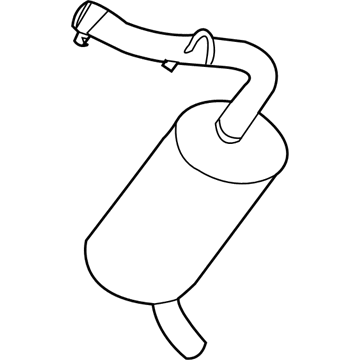
2006 Chrysler PT Cruiser Muffler Part Number: 5085267AF
Product Specifications- Other Name: Muffler - Exhaust; Exhaust Muffler; Exhaust Muffler Assembly; Direct-Fit Exhaust; Exhaust System Kit; Resonator
- Replaces: 5085267AC, 5085267AE, 5085267AD
- Item Weight: 24.00 Pounds
- Condition: New
- Fitment Type: Direct Replacement
- SKU: 5085267AF
- Warranty: This genuine part is guaranteed by Mopar's factory warranty.
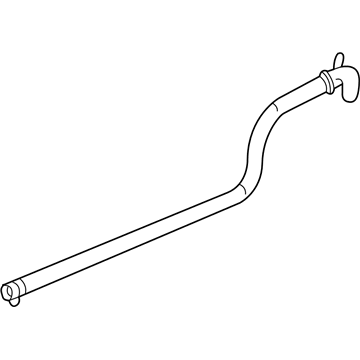
2006 Chrysler PT Cruiser Exhaust Pipe Part Number: 5085910AC
Product Specifications- Other Name: Pipe - Exhaust Extension; Exhaust Intermediate Pipe; Direct-Fit Exhaust; Exhaust System Kit; Intermed Pipe; Pipe Exhaust Extension
- Replaces: 5085910AB
- Item Weight: 12.70 Pounds
- Item Dimensions: 56.2 x 17.3 x 3.8 inches
- Condition: New
- Fitment Type: Direct Replacement
- SKU: 5085910AC
- Warranty: This genuine part is guaranteed by Mopar's factory warranty.
2006 Chrysler PT Cruiser Catalytic Converter Part Number: 5085980AD
Product Specifications- Other Name: Converter - Exhaust; Converter; Pipe And Converter Exhaust; Converter Catalytic
- Item Weight: 15.50 Pounds
- Item Dimensions: 48.5 x 6.6 x 8.6 inches
- Condition: New
- Fitment Type: Direct Replacement
- SKU: 5085980AD
- Warranty: This genuine part is guaranteed by Mopar's factory warranty.
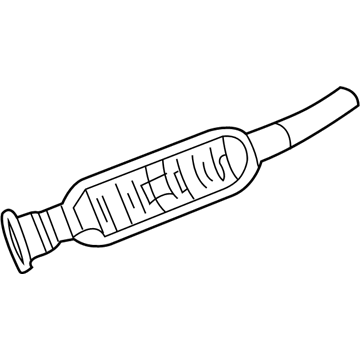
2006 Chrysler PT Cruiser Catalytic Converter Part Number: 5085658AB
$3124.33 MSRP: $4565.00You Save: $1440.67 (32%)Product Specifications- Other Name: Converter - Exhaust; Converter; Pipe And Converter Exhaust; Converter Catalytic
- Item Weight: 38.90 Pounds
- Item Dimensions: 37.7 x 21.0 x 8.2 inches
- Condition: New
- Fitment Type: Direct Replacement
- SKU: 5085658AB
- Warranty: This genuine part is guaranteed by Mopar's factory warranty.
2006 Chrysler PT Cruiser Exhaust Pipe Parts and Q&A
- Q: What Are the Best Practices for Servicing and Repairing an Exhaust Pipe on 2006 Chrysler PT Cruiser?A: Before working on the exhaust pipe, wait until the system has cooled down near the catalytic converter which gets hot quickly. Raise the vehicle on a hoist and then spray penetrating oil onto the band clamp fastener of the component to ease removal. Petroleum-based lubricants should be avoided when dealing with muffler or exhaust pipe isolators; it's safer to make a solution from liquid dish soap and water. Take off the muffler, relax the band clamp and remove the support isolator, next get rid of the intermediate pipe that links to the catalytic converter pipe (2). Clean the ends of the pipes and muffler and remove any broken or old isolators, rusted and overused clamps, supports and attaching parts. Any part of the exhaust system should be replaced with original equipment or equivalent items. Do not use clamps to fix everything in place until every component is lined up and the clearances are checked. Affix the intermediate pipe and isolator supports to the vehicle's chassis and add the muffler after that. Start your work from the front of the system. Align each part, ensuring there's enough room below and tighten the band clamps to 47 Nm (35 ft. lbs.). Make certain the band clamps aren't too tight or they could touch the center block and result in losing their strength, making a new one necessary. Remove the nut, strip the ends until the spot weld breaks, grind or file the weld down until the surface is flat and keep the clamps aligned as you replace them. Check the exhaust for any cracks or leaks after you've turned on the engine and start correcting them if something is wrong and make sure the exhaust is not rubbing against any body panels.
Related 2006 Chrysler PT Cruiser Parts
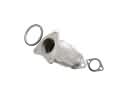 2006 Chrysler PT Cruiser Catalytic Converter
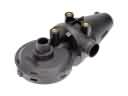 2006 Chrysler PT Cruiser PCV Valve
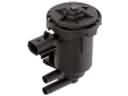 2006 Chrysler PT Cruiser Canister Purge Valve
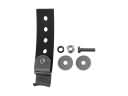 2006 Chrysler PT Cruiser Exhaust Hanger
 2006 Chrysler PT Cruiser Exhaust Heat Shield
 2006 Chrysler PT Cruiser Exhaust Manifold
 2006 Chrysler PT Cruiser Exhaust Manifold Gasket
 2006 Chrysler PT Cruiser Muffler
 2006 Chrysler PT Cruiser Tail Pipe
 2006 Chrysler PT Cruiser Vapor Canister